

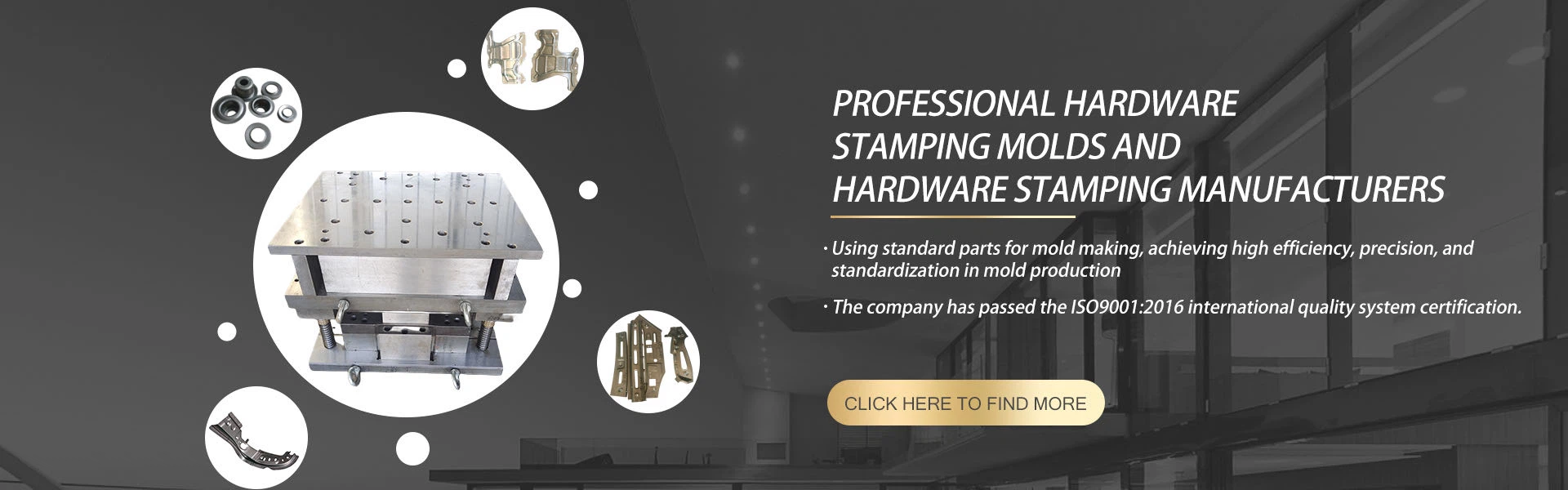


1. Engineering Beyond Limits: High-Velocity Metal Flow Control
When selecting a deep drawing die manufacturer, you are investing in the mastery of plastic deformation. Unlike standard stamping, stretching high-strength alloys requires precise calculations of material flow behavior, friction coefficients, and blank holding dynamics.
Our facility bridges the gap between complex structural geometry and predictable floor performance. Utilizing advanced Finite Element Analysis (FEA) to simulate every stage of the press stroke, we pre-calculate localized stress concentrations, material thinning rates, and wrinkles before a single block of tool steel is machined. The result is robust, multi-stage drawing tooling optimized for your specific press parameters, delivering flawless, split-free parts from day one.
2. Technical Capabilities & Fleet Capacity Matrix
Production Architecture & Toolroom Equipment
| Engineering Domain | Machinery & Technical Thresholds |
| Simulative Validation | Full-loop AutoForm, FastBlank, and UG-NX multi-axis CAD/CAM deployment |
| CNC Hard Milling Center | High-speed 5-axis machining centers delivering structural tolerances within $\pm0.005\text{ mm}$ |
| Precision Micro-Wire EDM | Ultra-precise wire cutting achieving friction-surface tolerances of $\pm0.002\text{ mm}$ |
| Hardening Treatments | In-house vacuum quenching, specialized nitriding, and high-performance TD coating |
| Tryout Press Array | Double-action hydraulic and mechanical press systems ranging from 100T up to 1000T |
Material Compatibility & Dimensional Limits
📊 Manufacturing Envelope Standards
Processed Alloys: Deep Drawing Quality (DDQ) Stainless Steel (SUS304/316), HP295/SG295 Gas Bottle Steel, Aluminum Alloys (5052/6061), Brass, SPCC.
Sheet Thickness Range: Engineered for material Gauges from $0.25\text{ mm}$ micro-electronics up to $8.0\text{ mm}$ heavy structural frames.
Max Draw Depth Threshold: Capable of achieving up to $450\text{ mm}$ draw depth via highly optimized reduction ratios across multiple stations.
Die Base Material Specs: Heavy forged medium carbon steel (#45) or high-tensile cast iron (GG30) for dampening severe press impact.
3. Structural Core Innovations: Engineering Out The Downtime
Multi-Stage Draw Ratio Optimization
Pushing an alloy past its Limiting Draw Ratio (LDR) causes catastrophic failure. Our engineering division splits severe plastic strain across highly balanced progressive drawing sequences or reverse drawing stations. By managing work-hardening behavior between operations, our tooling guarantees uniform wall thickness and zero material necking.
Friction Eradication via Advanced Surface Metallurgy
High-volume deep drawing generates immense localized heat, causing sheet metal to pick up and gall on the die radii. To eliminate score marks and reduce reliance on chemical lubricants, we integrate premium Tungsten Carbide (TC) inserts at critical high-wear friction zones or apply a deep-layer Thermal Diffusion (TD) coating. This elevates surface hardness beyond 3000 HV, radically extending the interval between tool maintenance.
Proportional Nitrogen Manifold Systems
Unstable material gripping causes instantaneous flange wrinkling or wall tearing. Our deep draw molds utilize fully integrated nitrogen gas spring manifolds or precise custom cushion-pin configurations. This delivers a uniform, controllable blank holder force across the entire compression profile, adapting perfectly to the material's changing surface area as it enters the cavity.
4. Frequently Asked Questions (Structured for Search Snippets)
Q1: How do you verify the thinning rate of the component before shipping the tool?
A: We do not rely on visual inspection alone. Every drawn sample from our 1000T tryout press undergoes 3D Coordinate Measuring Machine (CMM) scanning. We physically cross-section trial blanks to measure actual wall thickness against the virtual FLD (Forming Limit Diagram) model, ensuring the thinning rate stays strictly within your specified safety margins.
Q2: Can your toolroom manufacture interchangeable inserts for automated global lines?
A: Absolutely. Every cutting punch, drawing ring, and blanking insert is precision-ground to standardized imperial or metric dimensions (compatible with MISUMI/DANLY/FIBRO setups). We provide full 3D assembly maps and hard-coded part IDs, allowing your local maintenance crew to drop in replacement inserts with zero manual shimming.
Q3: What is your factory's standard protocol for overseas rust protection during sea freight?
A: Given the high humidity of maritime shipping, all raw tool steel surfaces are treated with premium military-grade dewatering rust-preventative oil. The entire die assembly is then wrapped in Volatile Corrosion Inhibitor (VCI) vacuum packaging and securely anchored inside heavy, iron-reinforced wooden crates.
Hot Tags: deep drawing die manufacturer | custom metal stretching tooling factory, China deep drawing die manufacturer | custom metal stretching tooling factory manufacturers, suppliers, factory, bending mold, Deep Drawing Stamping Die, Multi station Stamping Die, Piercing Die, Progressive Die Tooling, Sheet Metal Stamping


