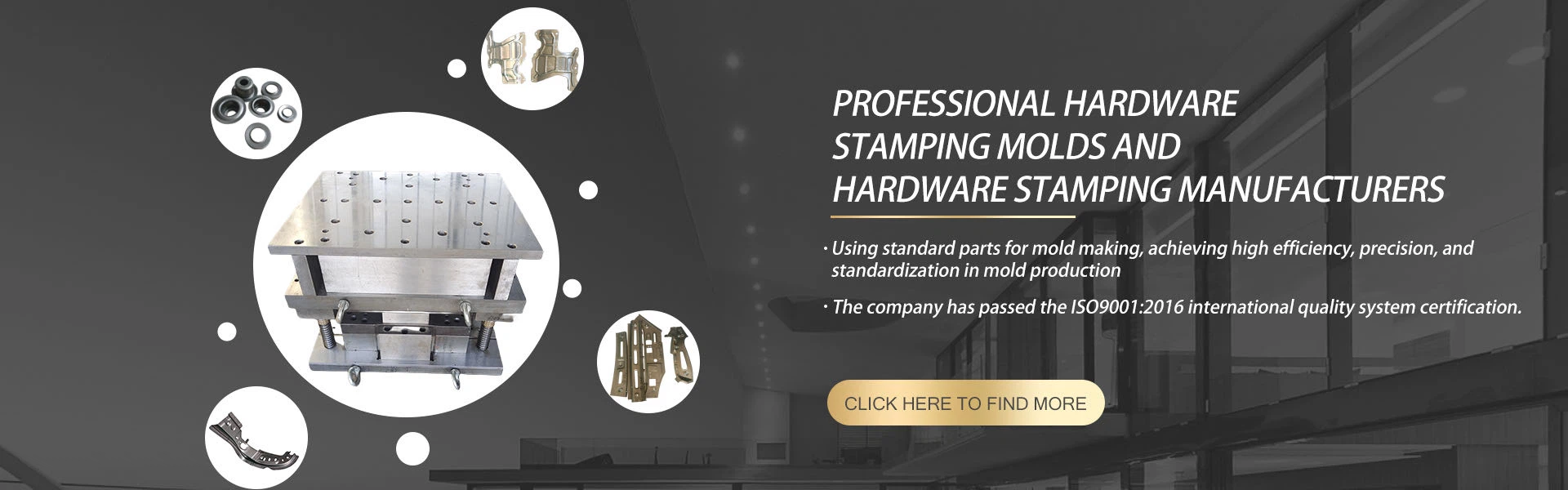
Caster Stamping Die

Company advantages

Professional team

Under the scientific and technological guidance of the company's professional team, continuous research and development and continuous improvement have produced a number of series of products that are deeply loved by Chinese and foreign customers, enhancing brand value and industry influence.

Production market

Our customers are from the United Kingdom, the United States, the Netherlands, Germany, Canada, Russia, Australia, New Zealand, Unraine, India, Brazil, Japan, South Korea, Turkey, Egypt, South Africa, etc.


Rich experience

Over the years, we have been deeply involved in this field and accumulated rich experience and professional knowledge through continuous exploration and innovation.

Advanced equipment

The company has introduced advanced technology and equipment and has strong scientific research strength.


What is Caster Stamping Die


When working with metal or manufacturing items, Caster Stamping Die are specialized tools used to cut, shape, or mold sheet metal or other materials into simple or complex shapes. They are important to the stamping process, which involves using a two-part tool to apply pressure to a sheet, machining the desired shape, and then pulling it out of the sheet.


FirstLast
 
Benefits of Caster Stamping Die
 
01/

Less Scrap Material
Caster Stamping Die is a metalworking method that can encompass punching, coining, bending and several other ways of modifying metal to produce your desired end part shape. The vast majority of material is used, hence, less scrap is produced. Progressive Die Metal Stamping may provide the most cost effective material option for manufacturing your parts.

02/

Quicker Setup
When compared to traditional fabrication or machining, the setup time may be much less for the Caster Stamping Die process. What is achieved in multiple Setups and processes during traditional fabrication and machining, may be performed in one operation if Progressive Die Stamping is utilized. This reduction in Setup and processing will result in a more cost effective piece part.

03/

Create More Geometries with a Single Process
Caster Stamping Die allows you to create parts with many geometries within a single tool. This video shows a single part progressing through a die. All required geometries of the part are achieved in one Progressive Die operation.

04/

Lower Cost per Part
All of the factors above contribute to reducing the overall cost of your part. Using Caster Stamping Die stamping allows you to create robust parts in the most cost effective and expeditious manner. We look forward to helping you save money on your next project!

05/

Longer Runs
The continuous material feed used in the Caster Stamping Die process allows for long runs. Longer runs between material changes and tooling adjustments mean your parts can be produced in a much shorter time.

06/

High Repeatability
The hard tooling die designs allow for high volume runs without die degradation. This means that part quality remains high and there are fewer failed parts.


Swivel Caster Mould


Application of Caster Stamping Die

In the automotive industry, it is used to manufacture body panels, chassis parts, clips, brackets, and other parts.

In the aircraft industry, stamping tools are used to make structural parts, engine parts, skins/control surfaces, and interior parts.

It is used to manufacture electrical parts such as switch plates, connectors, and terminals.
Many stamped parts, such as panels, brackets, and hinges, can be found in household appliances such as washing machines, freezers, and ovens.

Stamped parts are also used in the manufacture of medical gadgets and devices such as surgical instruments, implants, and diagnostic tools.

Stamping dies are used to manufacture small parts, fasteners, clips, and structural components for the construction industry.


Types of Caster Stamping Die
 

Swivel Caster Mould
This device mainly includes core components such as special-shaped convex and concave upper molds, special-shaped concave mold lower templates, ejector, lower mold base, guide pillars and upper mold base. The special-shaped convex and concave upper mold is securely installed on the upper mold base, and the upper mold base is closely connected to the lower mold base through guide pillars. The lower mold base of the special-shaped mold is accurately installed on the lower mold base. At the same time, the special lower mold base shape mold and the ejector form a stable connection.

Directional Caster Mould
The directional continuous casting mold designed and customized by our factory adopts continuous stamping method. This innovative structure not only greatly reduces the consumption of manpower and material resources, but also enables unmanned stamping operations, thereby significantly improving production efficiency and cost control. The mold structure adopts a unique inlaid design to ensure the stability and durability of the mold and provide strong support for continuous stamping.

Automatic Caster Stamping Die
Automatic continuous casting mold is also called continuous stamping and continuous casting mold. The mold has high efficiency and precision, and the mold service life can reach up to one million pieces. The caster molds we manufacture are sold at home and abroad. Continuous casting and continuous stamping molds can be quickly disassembled and replaced. Each set of molds is equipped with four guide posts, and the accuracy of each guide post is 0.01mm. The wearing parts of the mold can also be equipped with a quick-release structure. Welcome to visit the factory for on-site inspection.

Caster Bracket Stamping Die
Our caster bracket stamping die structure adopts a continuous stamping process to ensure that the average quality of the stamped parts produced reaches 500,000 pieces. The main material of the mold is high-quality skd-11 material to ensure its durability and stability. We are equipped with advanced testing equipment to ensure that each process meets the drawing requirements, thereby ensuring the accuracy of the final product. This mold is especially suitable for press equipment equipped with servo feeders, realizing a fully automated production process, significantly reducing human resource investment and significantly improving production efficiency.


Components of Caster Stamping Die


Die Block

The female portion of the die, situated at the bottom of the assembly, housing holes and protrusions necessary for material forming.


Punch

The male portion of the die, applying force to cut or form the workpiece, usually made of hardened steel or tungsten carbide.


Punch Plate

Where the punching component is attached, driven by hydraulic or mechanical means.


Stripper Plate

Ejects formed or trimmed parts from the punch after each stroke.


Die Holder

Supports the die block, clamped by a bolster plate.


Pressure Pads

Hold the workpiece during cutting or forming.


Guide Pins

Align the two halves of the die.


Pressure Plates

Distribute the force exerted by the punch.


How do I choose a Caster Stamping Die service?
定向脚轮模具

Service company with many years of design experience

Look for a service company with years of experience designing and manufacturing stamping dies. To get the best service for your needs, find out if the service provider has experience in your field. Learn how service companies check the quality of their work.


脚轮支架冲压模具

Provider technology and skills

Make sure they meet the requirements of a quality management system that is well known and appropriate for your organization. Check the service provider's technology and skills to ensure they can meet your needs. If the products you want to use are difficult or uncommon, make sure the service provider knows how to use them.

重型脚轮模具

Delivery time

Consider how many products the service provider can produce and how long the delivery time will be. Request detailed quotes and information from multiple service companies to ensure you get the best price. Ask for recommendations and reviews from repeat customers or people you know in the industry.

旋转脚轮模具

Communicate clearly

It is important to be able to communicate clearly throughout the mold making process. Early signs of miscommunication can lead to further problems. If your production needs change over time, it's important to ensure your service provider can evolve and grow.


Metals Used in Caster Stamping Die
 

Steel

The main element of steel is carbon, which is an extremely hard and durable substance. The higher the carbon content of steel, the harder it will be. Stamped steel is highly desirable due to its longevity and durability. In order to increase its resilience, steel is normally alloyed to enhance its resistance to rust. The most common alloys for steel are chromium and nickel.

Stainless Steel

Another form of steel for stamping is stainless steel, another ferrous metal. The combinations of alloys, mostly chromium and nickel, in stainless steel determines its grade. Each grade has properties and characteristics that make them ideal for a wide variety of applications. Stainless steel grade 316 is ideal for marine applications while stainless steel grade 404 is used for chemical and food processing.

Aluminum

Aluminum is a nonferrous metal that is used in stamping due to its lightweight, strength, and resistance to rust and corrosion. In most cases, aluminum is not used in its pure form but is alloyed with other methods to enhance its strength and to increase some of its other properties and characteristics.

Copper

Copper, like aluminum, is a nonferrous metal that is easily formed and can quickly be shaped into one piece of seamless components. It is a low maintenance metal that is highly resistant to corrosion and has naturally hygienic properties for use in medical, food, and beverage production. Though pure copper is used in stamping, it is often alloyed to enhance its durability and strength. Its high ductility makes it an ideal metal for the stamping process.


Stamping method of Caster Stamping Die
 

Compound Metal Stamping
During the compound metal stamping process, a metal strip is fed through a compound die, which performs all stamping operations in one stroke. This process is most suitable for projects requiring medium and high-volume production of flat parts. While progressive die stamping offers fast production times regardless of part complexity, compound die stamping can be slower for larger parts with more intricate design elements.


Transfer Die Stamping
One of the main differences between transfer die stamping and progressive die stamping is that the workpiece is separated from the metal strip in the first step. The workpiece is then transferred between several workstations to complete the part. This process is ideal when working with complex designs and larger parts that can't easily move through die stamping stations.


Traditional Metal Stamping
Traditional metal stamping often utilizes stage tooling for stamping operations. While stage tooling offers lower setup costs, it results in the highest price per piece. With progressive die tooling, you have higher initial costs, but lower costs per piece. In terms of speed and production volume, stage tooling is slower and more ideal for small, low-volume production runs, whereas progressive die stamping is fast and suitable for large production runs.


How to Maintain Caster Stamping Die


● Improving the design of Caster Stamping Die Whether the design of Caster Stamping Die is reasonable or not is the basis of improving the durability of Caster Stamping Die. Therefore, effective measures should be taken to improve the durability of the Caster Stamping Die when designing the stamping die, for example, the life of the Caster Stamping Die for small holes is often shown on the punch for small holes. For this kind of Caster Stamping Die, the small punch should be as short as possible in order to increase the strength, at the same time, the guide sleeve should be used to strengthen the protection of the small punch. In addition, in the design of Caster Stamping Die, we should take into account the form of the die frame, the fixing method and guiding form of the Punch and concave die, the determination of the pressure center and the rigidity of the upper and lower templates.

● Proper selection of Caster Stamping Die materials Different Caster Stamping Die materials have different strength, toughness, and wear resistance. The use of advanced materials under certain conditions can increase durability several times. Therefore, in order to improve the durability of Caster Stamping Die must choose good materials.

● Reasonable forging and heat treatment of Caster Stamping Die parts It is one of the main ways to improve the durability of Caster Stamping Die to select high-quality Caster Stamping Die materials and to make reasonable forging and heat treatment for the same materials and different materials. For example, if the quenching, if the heating production is too hot, will not only make the workpiece brittle but also easy to cause deformation and cracking in cooling, so that the durability of the reduction. Therefore, in the manufacture of Caster Stamping Die, we must reasonably master the heat treatment process.

● Reasonable arrangement of Caster Stamping Die manufacturing process and the guarantee of processing accuracy The processing precision of the Caster Stamping Die has a great impact on the durability of the Caster Stamping Die. Such as in the blanking die assembly gap is not uniform, under the action of Shear Force will often cause the die to bite and affect the life of Caster Stamping Die. At the same time, Caster Stamping Die Surface finish too low, will also reduce the durability of the Caster Stamping Die.


Our Factory


Hengshui Dongmo Precision Metal Products Co., Ltd. ′s main business scope includes stamping die manufacturing, hardware products, aerospace product parts, automatic production lines, integrating scientific research and development, production and sales. The sales network covers all provinces, cities and regions of the country, and has been unanimously praised by customers. The company has introduced advanced technology and equipment, and has a strong scientific research force. Under the scientific and technological guidance of the company′s professional team, continuous research, development, and continuous improvement have produced a number of series of products that are popular with Chinese and foreign customers, which has enhanced the brand value and industry influence.


certificate


productcate-331-455
productcate-330-456
productcate-329-455
productcate-329-455
productcate-329-456
productcate-330-456


FAQ


Q: What are the different types of die stamping?

A: There are three types of die stamping production methods: line, transfer, and progressive. with progressive being the most used. Ferrous and nonferrous metals are used in die stamping. Metals should be tested for their ductility and tensile strength.

Q: What is a progressive stamping die?

A: Progressive die stamping uses a type of tooling called a progressive die, which contains multiple stamping stations to carry out simultaneous operations on a sheet metal strip. By combining all the necessary tools into one die set, progressive die stamping is a great solution for high-volume production runs.

Q: What is line die stamping?

A: Line/Transfer die stamping technology is applied to produce parts that are free from splits or wrinkles and have the required dimensional accuracy and surface quality. At the same time, using this technology tight production deadlines can be met and the overall lead time and costs reduced.

Q: What is a stamp die?

A: Stamping dies are the tools that shape and cut sheet metal parts. They are commonly developed using computer-aided design (CAD) software and analytical programs to create and prove-out highly accurate, unambiguous designs. These designs are then translated into stamping dies by skilled craftsmen, known as diemakers.

Q: Do you stamp first or die cut first?

A: Some crafters find it more intuitive to die-cut first, while others prefer stamping first for a more controlled start. Stamp on Separate Paper - If you're stamping on a separate sheet of paper, you can stamp first without worrying about damaging your final project.

Q: What is the difference between metal stamping and die casting?

A: The two different processes also have different strengths and weaknesses. Die casting is capable of producing parts with extremely complex geometries. Metal stamping is more economical when it is used for parts with simpler geometries.

Q: What is hot stamping die?

A: Hot stamping is accomplished with the use of hot stamping dies, into which the lettering, pattern, logo, image or other design to be transferred is engraved and/or photoetched. The die is mounted in a press and heated, with the product to be stamped beneath it. The foil is placed between the two.

Q: What is a foil stamp die?

A: Foil stamping/printing is the application of metallic and special effect foils to paper or card. The process involves using an etched metal die (also called a block or plate) manufactured from either magnesium, brass or copper, which is heated to the required temperature and stamped into the paper or card stock.

Q: What is the difference between fine blanking and stamping?

A: In fine blanking, a single stroke of the press performs all the operations needed to form the part. In progressive stamping, a strip of coiled metal advances through a series of stations within the die. Each station performs a single small step that builds on the previous one and prepares for the next.

Q: What is the die stamping process?

A: Die stamping is a cold forming process that takes a strip of metal, also called a blank or tool steel, and cuts and shapes it using a single or series of dies to create a desired shape or profile.

Q: What is the process of blanking stamping?

A: Blanking. When required, blanking is the first step of the stamping process. Blanking is the process of cutting larger sheet or coils of metal into smaller, more manageable pieces. Blanking is usually performed when a stamped metal piece will be drawn or formed.

Q: What is the fine blanking process?

A: Fine blanking is a derivative process of stamping process that uses additional tools and attachments to manufacture gears of better dimensional accuracy and precision than the stamping process. Extrusion is used to generate teeth on long rods by pushing the gear material through a die of the required shape and size.

Q: What is the maximum thickness for fine blanking?

A: The V-ring on the blank holder can largely limit the outward flow of internal materials. The layout of the V-ring needs to consider the thickness of the sheet. At present, the thickness of the parts produced by fine blanking is mainly less than 8 mm, and the maximum thickness of the parts can reach more than 20 mm.

Q: What material is used for stamping?

A: The most common copper alloys include bronze, brass, and nickel silver, all of which can be formed into various shapes to fit specific application requirements. With this versatility, copper and its alloys have become some of the most popular materials for metal stamping.

Q: Why is it called a stamping die?

A: Die stamping is an alternative term used to describe the sheet metal stamping process. In a sheet metal stamping process, specialized dies, in conjunction with stamping presses, cut, bend, form and transform metal sheet into useful parts (components).

Q: What is a progressive stamping die?

A: Progressive die stamping uses a type of tooling called a progressive die, which contains multiple stamping stations to carry out simultaneous operations on a sheet metal strip. By combining all the necessary tools into one die set, progressive die stamping is a great solution for high-volume production runs.

Q: What steel are stamping dies made of?

A: Tool steel
Dies contain cutting and forming sections that are usually made from special hardenable steel, known as tool steel. These cutting and forming sections can also be made from different hard wear-resistant materials, like carbide.

Q: What are the quality issues with metal stamping?

A: One of the most common problems in metal stamping is poor quality stamping, which can result in punching parts being prone to problems such as cracking, fewer holes, surface scratches, deformation, inconsistent size, and excessive burrs during initial processing.

Q: What is the difference between engraving and stamping?

A: With stamping, the entirety of a design can be embedded with a single press. Engraving on the other hand, marks every aspect of the design individually. If a design has five numbers, each number is cut one-by-one. This makes marking large quantities of nameplates extremely time consuming.

Q: What material are stamping dies?

A: Materials for manufacturing Stamping Dies are steel, cemented carbide, steel-bonded cemented carbide, zinc-based alloy, low-melting alloy, aluminum bronze, polymer materials, and so on. Most of the materials used to make stamping molds are steel.

As one of the most professional caster stamping die manufacturers and suppliers in China, we're featured by quality products and competitive price. Please rest assured to buy caster stamping die made in China here from our factory.

Punch Stamping Die, Rice Cooker Inner Pot Mold, Deep drawing metal forming die