

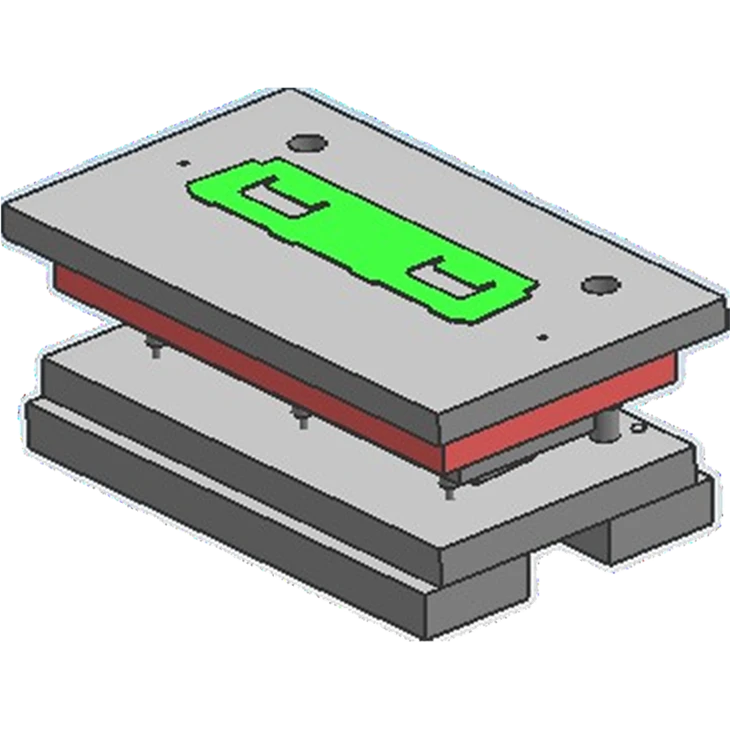
Kinetic Accuracy: High-Tolerance Processing via Precision Metal Stamping Dies
Executing micro-metric tolerances across high-volume production schedules requires an absolute control over material shear dynamics and elastic material behaviors. When running complex structural profile iterations, standard tooling setups frequently suffer from micro-vibration accumulation, which leads to immediate part clearance drift, edge burrs, and premature wear cycles. Our engineering facility approaches part fabrication from a strict kinematic tracking framework, developing precision metal stamping dies that isolate lateral cutting thrusts, regulate material displacement velocities, and maintain rigid positional alignments under continuous, high-frequency impact cycles.
Structural Parameters & Adaptive Technical Matrix
Our production frameworks are built to interface flawlessly with precise automated material decoilers and high-speed multi-axis press configurations, selecting targeted metal alloys to counteract material fatigue points:
| Processing Sub-Station | Technical Configuration | Targeted Mechanical Advantage |
| Main Carrier Base | High-Density Mehanite Casting | Optimizes vibrational absorption to isolate punch alignment drift. |
| Punch Matrix Profile | Premium Vanadis 8 Cold Work Steel | Eradicates microscopic chipping when blanking high-tensile sheet stock. |
| Clearance Tolerances | Engineered at 3% to 5% of Material Thickness | Secures clean burnish zones while extending punch cutting longevity. |
| Stock Progression Guide | Solid Bronze Elements with Embedded Graphite | Stabilizes linear feed paths without introducing surface scoring markers. |
| Backpressure Delivery | Compact Self-Contained Nitrogen Springs | Provides instantaneous, predictable stripping force throughout the stroke. |
Structural Rigidity & Asymmetric Off-Center Load Management
The real-world reliability of precision metal stamping dies relies entirely on balancing the physical pressure centers distributed across the tool face during heavy compression strokes. Our engineering blueprints deploy specialized internal features to completely neutralize variable mechanical deflection:
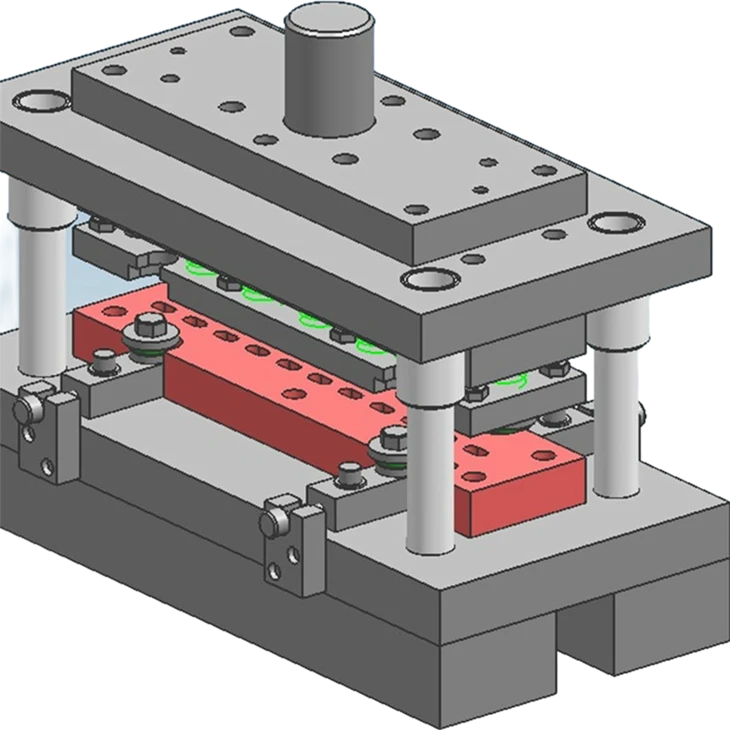
Triple-Guide Pillar Interlocking
To protect tight punch-to-die clearances from shifting during off-center loading, our tool architectures feature heavy-duty outer ball-bearing guide pillars backed by localized inner sub-alignment pins, providing a double-layered alignment loop.
Independent Station Cassette Modules
High-wear active zones are engineered as decoupled insert cassettes. Operators can unbolt and slide an individual station tray directly out of the press frame for quick maintenance or bench inspection, keeping the primary die alignment locked on the bolster.
In-Die Electronic Coining Calibration
To maintain absolute flatness and exact depth dimensions across variable material coil batches, our tooling incorporates micro-adjustable positive-stop blocks that allow technicians to dial in bottom dead center (BDC) penetration within a 2-micron envelope.
Operational Standard: Process security is optimized when tool behavior is monitored mathematically rather than visually. Our high-performance layouts incorporate proximity sensor arrays directly into the guiding plate channels, tracking material strip lift heights to prevent misfeed overlaps before a mechanical strike occurs.
Non-Destructive Quality Verification & Comprehensive Asset Records
Our institutional testing protocols match the tracking and compliance regulations required across global aerospace, electronic, and high-exposure automotive hardware supply chains:
Sub-Surface Eddy-Current Hardness Checks: Every vacuum heat-treated working insert undergoes uniform magnetic and ultrasonic testing to identify and reject hidden internal core micro-fissures before final grinding.
Blue-Light 3D Deviational Mapping: Trial component profiles from pilot press cycles are scanned using high-resolution optical tracking arrays, producing full-body color maps to verify exact springback compensation cuts against your native 3D blueprints.
Traceable Technical Document Packages: Shipped tool configurations are dispatched alongside a secure digital data vault containing complete 3D step assembly files, material traceability certifications, press operational benchmarks, and a component manifest with global standard commercial part numbers.
Hot Tags: precision metal stamping dies | high-tolerance component engineering, China precision metal stamping dies | high-tolerance component engineering manufacturers, suppliers, factory, Cold stamping mold, Composite mold, Deep Drawing Stamping Die, Metal parts mould, Piercing Die, Progressive Die Stamping


