


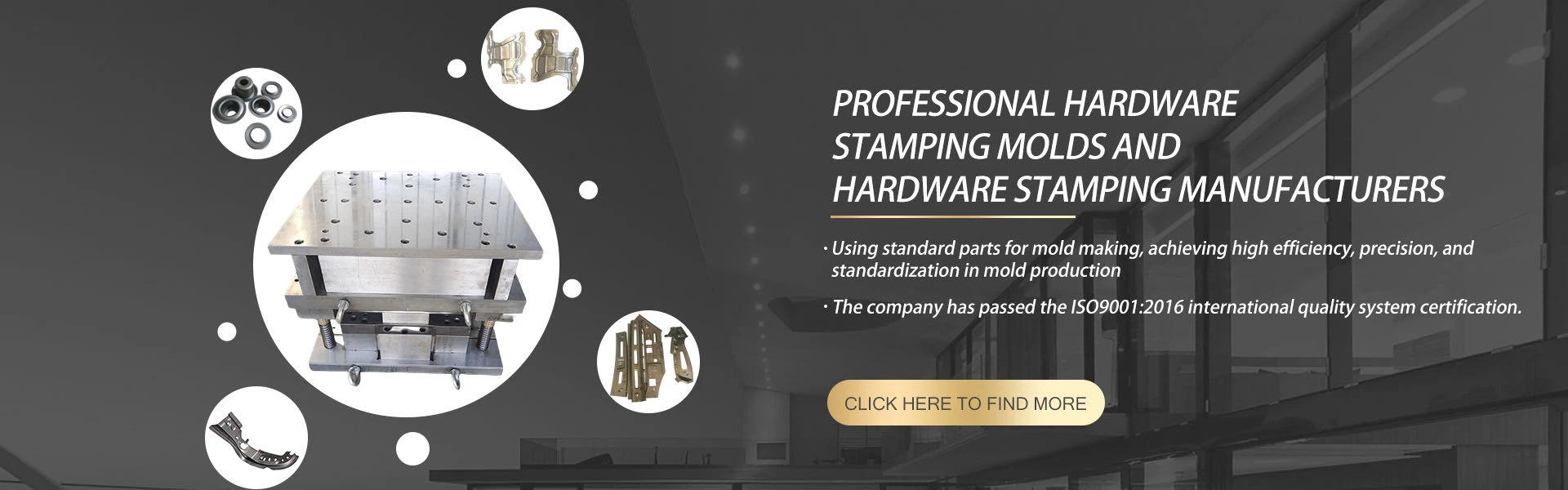


Overcoming Industrial Stamping Challenges
In the modern manufacturing landscape, component complexity is rising while structural tolerances are shrinking. As an established stamping die manufacturer, we engineer systems that directly address these production variables. We mitigate common operational failures such as premature cutting-edge chipping, inconsistent material feeding, and geometric deviation due to internal stresses. By deploying advanced metallurgy, precise mechanical alignment, and systematic tool geometries, we ensure your production floor maintains maximum throughput with minimal manual intervention.
Systems Configuration & Operational Matrix
| System Category | Technical Parameter & Implementation Standard |
| Tooling Architecture | Coining Dies, Blanking Tools, Deep Draw Systems, Fine Blanking |
| Active Inserts Alloy | D2, PM-Steel, Vanadis 4 Extra, Sleipner, K340 |
| Applicable Sheet Stocks | High-Strength Low-Alloy (HSLA), Spring Steel, Inconel, Titanium |
| Thickness Capability | 0.15mm to 10.0mm Accommodations |
| Die Performance Rating | Engineered for High-Speed and Multi-Million Strokes |
| Geometrical Tolerances | Stripper and Die Plate Alignment Within 0.005mm |
| Surface Engineering | PVD Coating, Duplex Treatment, DLC (Diamond-Like Carbon) |
| Press Feed Interface | Mechanical Gripper Feeds and Servo Roll Feeds Integration |
| Diagnostic Platforms | CAD/CAM/CAE Matrix, VISI Progress, DEFORM 3D |
| Compliance Benchmarks | Governed via ISO 9001 and Strict OEM Delivery Frameworks |
Core Engineering Methodologies
Our manufacturing execution rests upon three foundational engineering disciplines that guarantee stable tool geometry and extended production campaigns:
1. Advanced Thermal Management and Geometry
High-speed stamping generates localized friction heat that can alter the physical clearance between the punch and die block. Our tool designs incorporate balanced mass distribution and strategically placed air or fluid cooling channels where required. This thermal stabilization prevents tool expansion, ensuring burr-free part edges from the first stroke to the last.
2. Optimized Scrap and Part Ejection
A primary cause of die failure is scrap stacking or part pulling. We utilize specialized negative-taper die holes, vacuum-assisted slug removal slots, and custom mechanical lifter pins. This active ejection architecture guarantees that every scrap piece falls cleanly through the press bed, allowing high-speed automated feeding lines to operate without emergency stops.
3. Standardized Guide and Alignment Columns
To eliminate lateral deflections during structural forming operations, we utilize ultra-precise ball-bearing guide pillars and bushes sourced from globally certified components suppliers. The rigid die-set framework counteracts the intense horizontal forces generated during asymmetric forming, protecting delicate cutting inserts from side-load impacts.
Quality Verification and Deployment Lifecycle
Before any tool receives its final dispatch release, it undergoes a rigid four-stage validation protocol within our internal testing facilities:
Static Metrology Review: The physical tool assembly is locked onto a granite master plate where digital indicators map the absolute flatness, parallelism, and true perpendicularity of all working plates.
Dynamic Strip Analysis: The progression strip layout is run through a dedicated prototyping press. We examine the exact transition zones, pierce-to-form ratios, and material flow characteristics to guarantee zero strip buckling.
Continuous Run Certification: The die undergoes a sustained high-velocity test run at target stroke speeds. This proves the structural integrity of internal springs, nitrogen cylinders, and automated sensors under continuous vibration.
Full Part CMM Characterization: Final stamped components undergo full-spectrum coordinate measuring machine (CMM) tracking to compile statistical process control (SPC) data, ensuring a high capability index (Cpk) right out of the box.
Protective Packaging and Deployment Assets
We employ a meticulous preservation strategy to ensure the tool assembly arrives ready for immediate press installation. The complete die set is treated with a specialized moisture-repelling wax barrier, wrapped within dual-layer heavy-gauge VCI anti-corrosion barrier packaging, and placed into a heavy-duty structural steel-reinforced crate.
Every shipment includes an external waterproof enclosure housing essential technical documentation: native engineering datasets, 2D tool drawings, complete bills of materials (BOM), heat treatment hard-copy certifications, and a definitive press setup manual specifying recommended shut heights, pitch lengths, and nitrogen pressure settings.


Hot Tags: engineered stamping die for high precision metal components manufacturing, China engineered stamping die for high precision metal components manufacturing manufacturers, suppliers, factory, Automotive Stamping Dies, Blanking Die, Blanking mold, Composite mold, Precision Deep Drawing Mold, Progressive Die Stamping


