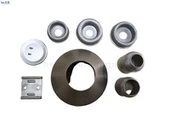


Common Structures of Stamped Parts

I. Why Common Structures of Stamped Parts are a Core Required Course for Designers
Designing stamped parts is not simply drawing blueprints; it's a systematic engineering process that requires consideration of material properties, mold technology, and forming logic. Insufficient understanding of common stamped part structures can easily lead to a series of problems: for example, unreasonable structural design can cause cracking and wrinkling during stamping, or dimensional deviations after forming, increasing mold rework costs and delaying production cycles. A thorough understanding of common stamped part structures allows designers to anticipate forming risks from the outset, meeting product functional requirements while considering mold manufacturing feasibility and production efficiency, truly achieving seamless integration of design and production. This confirms that understanding common stamped part structures is core knowledge that every qualified designer must master.
II. Analysis of Core Common Stamped Part Structures: Key Design Points Designers Must Remember
1. Bending Structure: The Key to Balancing Springback and Precision
Bending is one of the common forming processes for stamped parts, and the corresponding bending structure design directly affects the final angle and dimensional stability of the part. When designing common structures for bent stamping parts, designers must focus on the matching relationship between the bending radius and the material thickness to avoid cracking on the outer side of the material due to an excessively small bending radius. Simultaneously, the springback characteristics of the material must be fully considered, and a preset springback compensation angle must be used to ensure the precision of the formed part meets standards. Furthermore, the edge design of bent structures should avoid sharp corners, appropriately increasing the rounded transitions. This reduces stress concentration and extends the service life of the stamping die, which is one of the core principles in the design of common stamping parts structures.


2. Stretched Structures: The Core Challenge in Controlling Deformation Stretched stamping parts are commonly found in deep-cavity parts, such as appliance housings and automotive fuel tanks. The core design challenge lies in controlling the amount of deformation during the stretching process to avoid defects such as wrinkling and cracking. When designing common structures for stretched stamping parts, designers must first determine a reasonable ratio between the stretching height and diameter to ensure the stretching coefficient is within a safe range. Secondly, a transition rounded corner must be designed between the bottom and sidewalls of the stretched part to reduce material flow resistance and evenly distribute stress. Meanwhile, for deep drawn structures, it is also necessary to consider adding process cuts or draw beads to further control material flow and ensure the integrity of the drawn forming. This is also a key detail to ensure the quality of common structures of drawn stamping parts.
Contact Us
Consultation Hotline: +86 15930861038
WeChat: 15930861038
Email: dongfangmould@aliyun.com
Service Commitment: Reply to inquiry within 12 hours; provide free mold design optimization for qualified customers.
Hengshui Dongmo Precision Metal Products Co., Ltd.
Hot Tags: metal heat shield housing molds, China metal heat shield housing molds manufacturers, suppliers, factory, Auto parts, Large scale processing of stamping parts, Metal Parts Stamping, Metal Stamping Parts, Precision Stamping Parts Customization, Progressive Stamping